Heavenly Stems and Earthly Branches, known as Gānzhī (干支), form a cornerstone of Feng Shui and East Asian culture. This system not only tracks time but also holds profound significance in interpreting destiny, the Five Elements, and relationships in life.
What Are Heavenly Stems and Earthly Branches? Origin and Significance
Heavenly Stems (天干) and Earthly Branches (地支), refer to the combination of 10 Heavenly Stems and 12 Earthly Branches. Together, they form a 60-year cycle used to mark time (years, months, days, hours) and applied in Feng Shui and astrology.

Originating during China’s Shang Dynasty, this system is attributed to the legendary figure Da Yao and is documented in ancient texts on the Five Elements and calendars.
The 10 Heavenly Stems
Each Heavenly Stem represents a stage in the natural growth cycle and is defined by its Yin–Yang nature and Five Element.
- Jia (甲) – Yang Wood
- Yi (乙) – Yin Wood
- Bing (丙) – Yang Fire
- Ding (丁) – Yin Fire
- Wu (戊) – Yang Earth
- Ji (己) – Yin Earth
- Geng (庚) – Yang Metal
- Xin (辛) – Yin Metal
- Ren (壬) – Yang Water
- Gui (癸) – Yin Water
=> Learn more: What Are Heavenly Stems? All About the 10 Heavenly Stems in Feng Shui
The 12 Earthly Branches
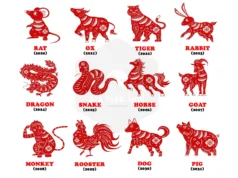
The 12 Earthly Branches correspond to the 12 Chinese zodiac animals. Each Branch represents a stage in the cycle of growth, maturity, decline, and renewal, and is associated with a Yin–Yang quality and a Five Element.
- Rat (子) – Yang Water
- Ox (丑) – Yin Earth
- Tiger (寅) – Yang Wood
- Rabbit (卯) – Yin Wood
- Dragon (辰) – Yang Earth
- Snake (巳) – Yin Fire
- Horse (午) – Yang Fire
- Goat (未) – Yin Earth
- Monkey (申) – Yang Metal
- Rooster (酉) – Yin Metal
- Dog (戌) – Yang Earth
- Pig (亥) – Yin Water
=> Learn more: What Are Earthly Branches? Details on the 12 Earthly Branches
Relationships Between Heavenly Stems and Earthly Branches
Relationships Among the 10 Heavenly Stems
The Heavenly Stems interact through compatibility and conflict based on the Five Elements:
- Compatibility (Favorable Combinations):
| Heavenly Stem | Compatible Stem | Relationship Explanation |
|---|---|---|
| Jia (甲) | Ji (己) | Wood generates Earth |
| Yi (乙) | Geng (庚) | Wood controls Metal |
| Bing (丙) | Xin (辛) | Fire controls Metal |
| Ding (丁) | Ren (壬) | Fire generates Water |
| Wu (戊) | Gui (癸) | Earth generates Water |
- Conflict (Challenging Interactions):
| Heavenly Stem | Conflicting Stem | Nature of Conflict |
|---|---|---|
| Jia (甲) | Geng (庚) | Metal cuts Wood |
| Yi (乙) | Xin (辛) | Metal restrains Wood |
| Bing (丙) | Ren (壬) | Water extinguishes Fire |
| Ding (丁) | Gui (癸) | Water suppresses Fire |
| Wu (戊) | Jia (甲) | Wood controls Earth |
Relationships Among the 12 Earthly Branches
The Earthly Branches form harmonious and conflicting relationships, influencing Feng Shui and destiny:
- Three Harmonies (Positive): Monkey-Rat-Dragon (Water), Tiger-Horse-Dog (Fire), Snake-Ox-Rooster (Metal), Pig-Rabbit-Goat (Wood).
- Six Combinations (Positive): Rat-Ox, Tiger-Pig, Rabbit-Dog, Dragon-Rooster, Snake-Monkey, Horse-Goat.
- Four Clashes (Negative): Rat-Horse-Rabbit-Rooster, Tiger-Monkey-Snake-Pig, Dragon-Dog-Ox-Goat.
- Six Harms (Negative): Rat-Goat, Ox-Horse, Tiger-Snake, Rabbit-Dragon, Monkey-Pig, Rooster-Dog.
- Six Destructions (Negative): Rat-Rooster, Rabbit-Horse, Ox-Dragon, Snake-Monkey, Goat-Dog, Tiger-Pig.
- Three Punishments (Negative): Tiger-Snake-Monkey, Ox-Goat-Dog, Rat-Rabbit.
- Self-Punishment (Negative): Dragon-Dragon, Rooster-Rooster, Horse-Horse, Pig-Pig.
=> Learn more: Compatibility and Conflicts of Heavenly Stems and Earthly Branches
Rules for Combining Heavenly Stems and Earthly Branches
The Heavenly Stems and Earthly Branches combine based on the principle of Yang with Yang, Yin with Yin, forming the 60 combinations of the Sexagenary Cycle. For example:
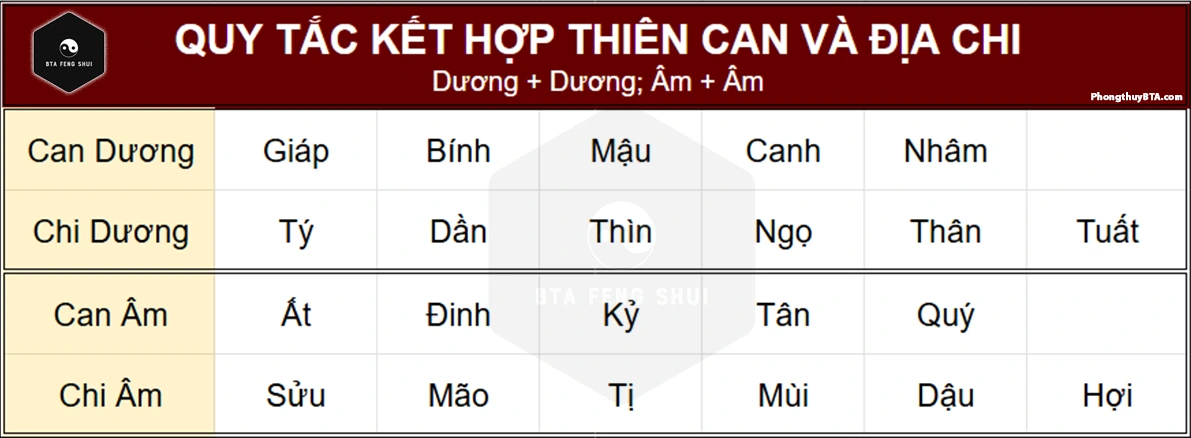
Yang Stems (Jia, Bing, Wu, Geng, Ren) pair with Yang Branches (Rat, Tiger, Dragon, Horse, Monkey, Dog), forming 30 combinations:
| Stem \ Branch | Jia (Wood) | Bing (Fire) | Wu (Earth) | Geng (Metal) | Ren (Water) |
| Rat | Jia Rat | Bing Rat | Wu Rat | Geng Rat | Ren Rat |
| Tiger | Jia Tiger | Bing Tiger | Wu Tiger | Geng Tiger | Ren Tiger |
| Dragon | Jia Dragon | Bing Dragon | Wu Dragon | Geng Dragon | Ren Dragon |
| Horse | Jia Horse | Bing Horse | Wu Horse | Geng Horse | Ren Horse |
| Monkey | Jia Monkey | Bing Monkey | Wu Monkey | Geng Monkey | Ren Monkey |
| Dog | Jia Dog | Bing Dog | Wu Dog | Geng Dog | Ren Dog |
Yin Stems (Yi, Ding, Ji, Xin, Gui) pair with Yin Branches (Ox, Rabbit, Snake, Goat, Rooster, Pig), forming 30 combinations:
| Stem \ Branch | Yi (Wood) | Ding (Fire) | Ji (Earth) | Xin (Metal) | Gui (Water) |
| Ox | Yi Ox | Ding Ox | Ji Ox | Xin Ox | Gui Ox |
| Rabbit | Yi Rabbit | Ding Rabbit | Ji Rabbit | Xin Rabbit | Gui Rabbit |
| Snake | Yi Snake | Ding Snake | Ji Snake | Xin Snake | Gui Snake |
| Goat | Yi Goat | Ding Goat | Ji Goat | Xin Goat | Gui Goat |
| Rooster | Yi Rooster | Ding Rooster | Ji Rooster | Xin Rooster | Gui Rooster |
| Pig | Yi Pig | Ding Pig | Ji Pig | Xin Pig | Gui Pig |
These 60 combinations repeat every 60 years, starting with Jia Rat (Wood Rat) and ending with Gui Pig (Water Pig).
What Do Heavenly Stems and Earthly Branches Represent?
The Heavenly Stems and Earthly Branches go beyond timekeeping, connecting to the Five Elements, directions, colors, peak seasons, and Feng Shui aspects:
| Heavenly Stem | Earthly Branch | Yin-Yang | Five Elements | Color | Direction | Peak Season | Body parts | Professions |
|---|---|---|---|---|---|---|---|---|
| Jia | Tiger | Yang | Wood | Green | East | Spring | Liver, gallbladder, head, shoulders | forestry, woodworking, textiles |
| Yi | Rabbit | Yin | ||||||
| Bing | Snake | Yang | Fire | Red | South | Summer | Heart, blood, eyes | thermal energy, optics, chemistry |
| Ding | Horse | Yin | ||||||
| Wu | Dragon, Dog | Yang | Earth | Yellow | Center | End of Seasons | Stomach, spleen | agriculture, real estate |
| Ji | Ox, Goat | Yin | ||||||
| Geng | Monkey | Yang | Metal | White | West | Autumn | Lungs, tendons | metal mining, machinery production |
| Xin | Rooster | Yin | ||||||
| Ren | Pig | Yang | Water | Black | North | Winter | Kidneys, bladder | fisheries, transportation |
| Gui | Rat | Yin |
Frequently Asked Questions (FAQs)
1. Are Heavenly Stems and Earthly Branches the same as the Chinese zodiac?
Partially, yes — but not exactly.
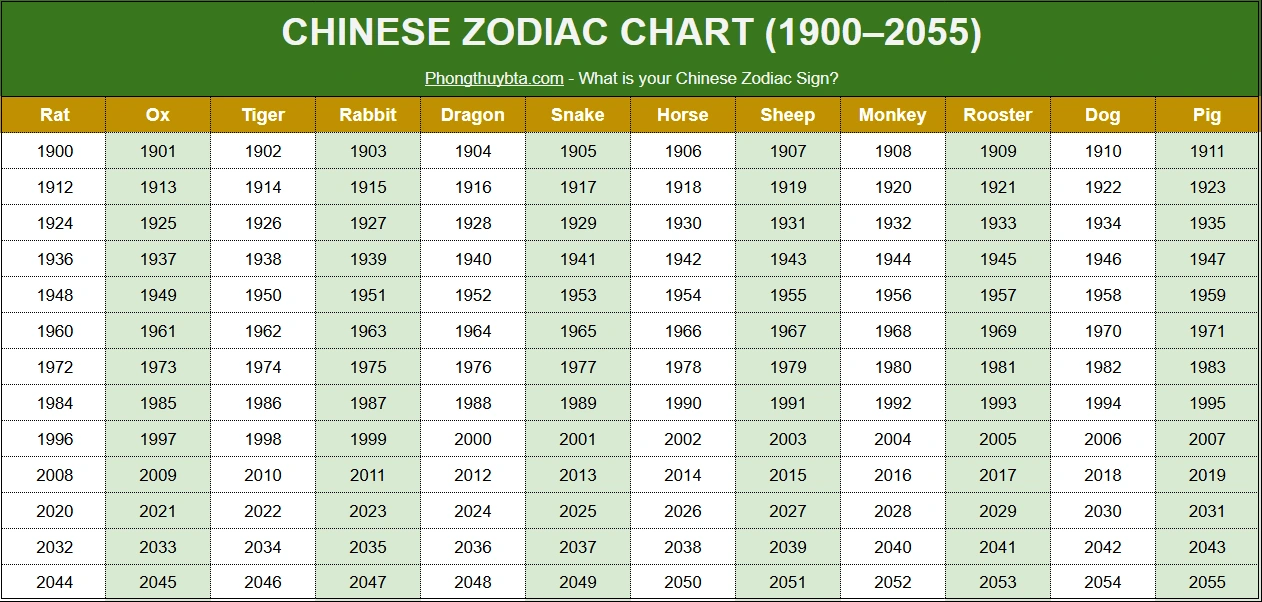
The Chinese zodiac is commonly understood as the 12 animal signs, which are based on the Earthly Branches. However, the complete traditional system also includes the 10 Heavenly Stems. Together, Heavenly Stems and Earthly Branches form the 60-year cycle used in Chinese calendars and metaphysical studies.
2. How does the 60-year cycle work in daily life?
The 60-year cycle is created by combining the 10 Heavenly Stems with the 12 Earthly Branches in sequence.
Each year, month, day, and hour has its own stem–branch pair, which is used to analyze timing, life phases, and energetic patterns rather than making fixed predictions.
3. Can Heavenly Stems and Earthly Branches influence personality?
They are believed to reflect personality tendencies, not determine personality.
Heavenly Stems often relate to outward traits and elemental nature, while Earthly Branches reflect deeper habits and instincts. Together, they provide symbolic insight rather than absolute definitions.
4. Do Heavenly Stems and Earthly Branches apply only to birth years?
No. They apply to years, months, days, and hours.
This multi-layered structure is why the system is widely used in calendars, Feng Shui timing, and traditional astrology, not just birth year analysis.
5. Are Heavenly Stems and Earthly Branches used outside of astrology?
Yes. They are also used in traditional calendars, Feng Shui, classical timekeeping, and Chinese metaphysical systems.
Their main purpose is to organize time, cycles, and elemental relationships across different aspects of life.
The Heavenly Stems and Earthly Branches are integral to Feng Shui and East Asian culture, offering insights into time, destiny, and harmony with nature.
Please rate this article 5 stars and share if you found it helpful!