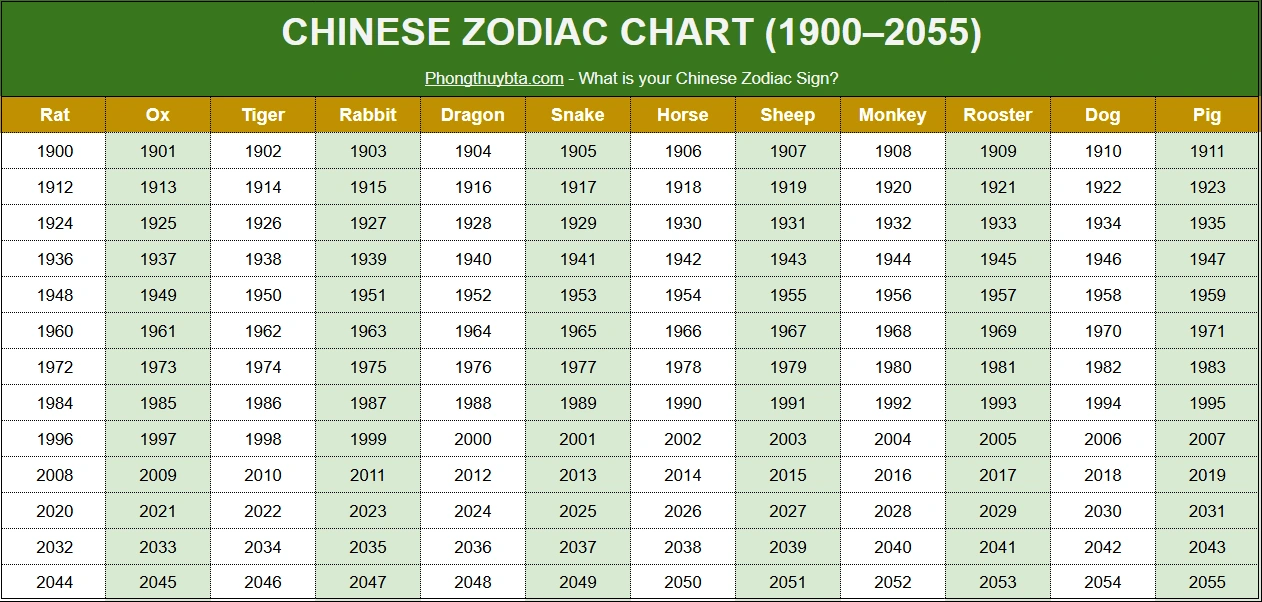
The Chinese zodiac story begins with a single question from the Jade Emperor: how should the years be named for all time? From that moment, the legendary race took shape—an origin tale that continues to guide Chinese astrology today.
At BTA Feng Shui, where thousands have explored the 12 Earthly Branches, Five Elements, and BaZi charts, we invite you to uncover the full story: the timeless race, its ancient roots, and the unique zodiac traits that reveal who you truly are.
The Great Race: The Most Famous Chinese Zodiac Legend
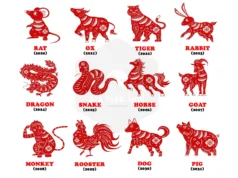
Long ago, the Jade Emperor announced an extraordinary challenge: the first twelve animals to reach his palace—by crossing a powerful, fast-flowing river—would earn a place in a new lunar calendar. This fabled contest, now known as The Great Race, became the origin story of the Chinese zodiac.
The Rat and the Cat, clever but poor swimmers, agreed to ride across the river on the Ox, who kindly allowed both to sit on his back. But as they neared the opposite shore, the Rat betrayed his companion: he pushed the Cat into the swirling water, then leapt from the Ox’s head and sprinted to the finish to claim first place. The hardworking Ox accepted second place, unaware of the Rat’s trick.
The Tiger arrived next, panting heavily after battling fierce currents, earning third place through strength and determination.
The Rabbit reached shore in fourth place—not by swimming, but by hopping from stone to stone. When the path vanished, a floating log carried the Rabbit downstream to safety. Unbeknownst to the Rabbit, the Dragon, who arrived just behind, had blown a gentle gust of wind to push the log toward the bank.
The majestic Dragon could have won easily by flying, so the Jade Emperor questioned why it was only fifth. The Dragon explained that it stopped mid-race to bring rain to drought-stricken villages, and later paused to help the struggling Rabbit—acts of compassion that delayed its arrival.
Thunderous hoofbeats signaled the Horse charging toward the finish—until the Snake, hidden around the Horse’s hoof, suddenly uncoiled and startled it. The Snake slithered ahead into sixth place, leaving the shocked Horse in seventh.
Working together, the Goat, Monkey, and Rooster soon appeared on a makeshift raft. The Rooster had found it; the Monkey and Goat cleared weeds and guided it through the river. Impressed by their teamwork, the Jade Emperor awarded them eighth, ninth, and tenth place respectively.
Although an excellent swimmer, the Dog arrived eleventh. Its excuse? The river water was simply too inviting, and it stopped to play and enjoy a long bath.
At last, the Pig trotted in to claim twelfth. It had paused for snacks—and a nap—mid-race, barely finishing before the Jade Emperor closed the contest.
As for the Cat: swept away by the river, it reached the palace too late. From that day on, cats have despised rats, a rivalry echoed in countless stories across East Asia.
A Vietnamese Twist: Why Vietnam Has a Cat, Not a Rabbit
While the Vietnamese zodiac follows the same 12-year cycle, two animals differ from the Chinese system:
- Ox → Water Buffalo
- Rabbit → Cat
The most widely accepted explanation involves language evolution. The ancient Chinese character 卯 (Mão)—linked to the Rabbit in Chinese astrology—sounds similar to mẹo, the Vietnamese word for “cat.” Over centuries of cultural transmission, this phonetic similarity helped the Cat replace the Rabbit in Vietnamese tradition.
Another cultural factor: in Vietnamese and Southeast Asian agriculture, cats were valued protectors of grain, symbolizing prosperity and good fortune. This made the Cat a natural fit in the zodiac, giving the legend a distinctly Vietnamese identity.
Historical Roots: The True Origin of Chinese Astrology
While the race captivates the imagination, the Chinese zodiac origin is far older. Animal associations with the Twelve Earthly Branches appeared as early as the Shang Dynasty (1600–1046 BCE) on oracle bones. By the Han Dynasty (206 BCE–220 CE), scholars standardized the 12-year cycle, pairing it with the Ten Heavenly Stems to create the sacred 60-year calendar still used in Feng Shui and BaZi today.
Chinese Zodiac Animal Characteristics: Your Inner Nature Revealed
| Zodiac Animal | Key Traits | Element & Best Feng Shui Direction |
|---|---|---|
| Rat | Witty, resourceful, ambitious, charming | Water – North (career & opportunities) |
| Ox | Patient, reliable, methodical, strong-willed | Earth – Northeast (knowledge & stability) |
| Tiger | Brave, competitive, passionate, unpredictable | Wood – East (health & growth) |
| Rabbit | Gentle, elegant, compassionate, cautious | Wood – Southeast (wealth & harmony) |
| Dragon | Confident, intelligent, charismatic, lucky | Earth – Center/Southeast (power & fame) |
| Snake | Wise, intuitive, graceful, mysterious | Fire – South (recognition) |
| Horse | Energetic, independent, sociable, adventurous | Fire – South (success & passion) |
| Goat | Calm, artistic, kind, resilient | Earth – Southwest (love & relationships) |
| Monkey | Clever, curious, inventive, playful | Metal – West (creativity & children) |
| Rooster | Observant, hardworking, courageous, outspoken | Metal – Northwest (helpful people) |
| Dog | Loyal, honest, responsible, protective | Earth – Northwest (loyalty & protection) |
| Pig | Generous, diligent, sincere, pleasure-loving | Water – North (wealth flow) |
Why This Ancient Tale Still Matters Today
The Chinese zodiac stories are more than charming folklore—they are profound mirrors of human nature and practical tools for harmony. Understanding your animal sign and its elemental energy helps you choose the best home directions, career paths, and even compatible partners.
If this journey through the story of the Chinese zodiac has enlightened you, please give it a 5-star rating and share it with someone curious about their cosmic animal! Which zodiac animal are you, and does the race story feel true to your personality? Let me know in the comments—I read every one.